Showing posts with label Improve Your Health. Show all posts

Nitric Oxide: A Unifying Principle of Health

Nitric oxide is a unifying principle behind so many things we know are good for us, like probiotics and exercising and drinking more water and eating vegetables. What these all have in common is: They increase the amount of nitric oxide in your body.

And nitric oxide has a lot of different, significantly positive effects.

We’ve got all these different diets that have been proven to help people live longer and healthier, like the Mediterranean diet and the DASH diet and vegetarianism. What they have in common is an emphasis on foods that increase the amount of nitric oxide in your blood, in your cells and in your brain.

When the research first started, not many scientists thought nitric oxide was even worth looking at. Only about 40 research papers a year were being published on the subject — most of them coming from a single lab. When that lab’s scientists won the Nobel Prize for their work on nitric oxide, it electrified the scientific community. Five years later, more than 7,500 papers a year were being published about nitric oxide.

The number of things scientists have discovered that improve when you have more nitric oxide in your body is really impressive. People sleep better, they have more energy, they’re in better moods, they have less heart disease, less cancer, and have a better long-term memory. Nitric oxide plays an important role in your immune system — it kills bacteria and viruses and promotes the healing of wounds and injuries. It also helps people lose weight by stimulating the burning of fat. It keeps the veins free of plaque. It can delay or even prevent atherosclerosis. It makes your blood vessels dilate, which lowers your blood pressure. It increases blood flow, increasing endurance and strength.

One of the men who won the Nobel Prize (for discovering the effect nitric oxide has inside the human body) said he believes heart disease can be essentially eliminated by doing things that keep your nitric oxide level high. That’s a big statement from someone with his credentials.

Nitric oxide also functions as a neurotransmitter, helping to process nerve signals as they cross synapses.

The first thing researchers discovered is that nitric oxide dilates blood vessels, which means it relaxes the smooth muscle cells that line arteries, veins and lymphatic channels, allowing blood, nutrients, and oxygen to flow more easily through your body. Nitric oxide also prevents blood clotting, so it reduces the chance of heart attacks and strokes. It can lower your cholesterol level. It also prevents bad cholesterol from oxidizing into even worse artery-clogging forms. It lowers the risk of diabetes.

It also triggers the pituitary gland to release human growth hormone, which stimulates your body to build and repair and heal your muscle, bone and skin.

Nitric oxide is a signaling compound. The body uses it as a communication device. The strange thing is that it's a gas. It is released by your body into your body as a gas. That’s why it was hard to discover — the molecule’s life span is only a second or two.

There are many different pathways for raising the amount of nitric oxide in your body. For example, some foods, like spinach and beets, contain a high amount of nitrite and nitrate, which your body can convert into nitric oxide. Some of that conversion occurs in your mouth by probiotic bacteria in your saliva.

When you drink enough water, it helps the enzymes that convert a particular amino acid (L-Arginine) into nitric oxide do their job more effectively. So by drinking more water, it raises your nitric oxide level.

Some foods (like pumpkin seeds) contain more of that protein, L-Arginine, than others. If you eat more of that protein, you’ll have more of the raw material your body needs to make nitric oxide. Some foods (like watermelon) contain L-citrulline, which helps make the enzyme that your body uses to convert L-Arginine into nitric oxide. Some foods like blueberries and cherries contain anthocyanins, which prevent nitric oxide from being oxidized too quickly, which allows it to have more of a positive effect on your body.

When you exercise moderately, it stimulates your body to produce more nitric oxide. If you exercise too vigorously, it produces too many free radicals, and actually lowers the amount of nitric oxide in your body.

Fasting stimulates your body to produce nitric oxide.

Just about anything known to be good for you probably increases nitric oxide in your body. Turmeric, for example, raises the amount of nitric oxide in your body. Leafy green vegetables contain a high amount of nitrite and nitrate that your body can convert into nitric oxide. Apples contain polyphenols that help your saliva convert those nitrates and nitrites into nitric oxide.

Here’s an interesting tidbit: Since there is bacteria in your saliva that convert nitrate and nitrite into nitric oxide, when you use a mouthwash, it lowers the amount of nitric oxide in your body.

Here’s another one: Caffeine increases your blood vessels’ output of nitric oxide.

Are you as intrigued about this as I am? It all sounds good, of course, but is it safe? Can you have too much nitric oxide?

Louis Ignarro, the man I mentioned above, who won the Nobel Prize (along with two of his colleagues), said: "At extraordinarily high concentrations, nitric oxide is toxic. These levels, however, cannot be reached through the body’s internal mechanisms for producing nitric oxide from either food and supplement intake or from exercise. At relatively low levels within the body — the kind that can be attained through foods, supplements, and exercise — nitric oxide can dramatically influence our health in positive ways."

I mentioned that all the diets known to reduce heart disease and cancer have nitric oxide in common, but not all the foods in those diets are high in nitric oxide. So this discovery allows us to be more precise with our diet. There are other factors in food that are good for you, of course, but a big one has been hidden because it’s a gas, and now that we know about it, we can make even better choices.

It’s worth looking into and Ignarro's book — No More Heart Disease — is a good place to start.

Listen to this article as a podcast by clicking here.

Adam Khan is the author of Principles For Personal Growth
SlotralogyAntivirus For Your Mindand co-author with Klassy Evans of How to Change the Way You Look at Things (in Plain English). Subscribe to his blog here. You can email him here.


Playing to Your Strengths

Researchers have discovered that people can improve their own psychological health in positive ways (as well as the traditional way of working on problems). And one of these ways is to discover what your signature strengths are, and then exercise them more in your life.

A signature strength is something you're good at that is also something you enjoy doing. A questionnaire has been developed by a team of psychologists to help you discover what your signature strengths are. You can take the questionnaire for free here.

The researchers have defined 24 character strengths. They wanted characteristics that are universally appreciated and aspired to in every culture. They used multiple approaches to discover these. One of the criteria they used, for example, is what virtues do parents in every culture on earth want their children to have? 

Once you know what your signature strengths are, you can add more of it in your life and it will make you psychologically healthier.

Adam Khan is the author of Principles For Personal GrowthSlotralogyDirect Your Mind, and Self-Reliance, Translated. Follow his podcast, The Adam BombYou can email him here.

Makeup, Shampoo, Nail Polish — Are They Dangerous?

I just watched a four-part series on HBO Max called Not So Pretty. It's worth watching. The cosmetics industry is not very strictly regulated in the United States. On the ingredients labels, when it says "fragrance," the company doesn't have to reveal what chemicals it used because it's protected as a trade secret. And some of those chemicals are potentially harmful. 

The cosmetic industry can put a product on the market without testing its ingredients for safety. Lots of hair products, makeup, nail products, etc., have been linked to cancers and infertility problems. Products with talc — and a lot of products have talc — probably contain asbestos, which causes disease.

Some plastics used as containers for things like makeup and shampoo can leach into the product, get absorbed into your skin, enter your bloodstream and disrupt your hormones.

When consumer groups have tried to get stricter legislation to oversee these industries, the industry responds with legions of paid lobbyists, who descend on Congress and sway the vote or kill the bill. 

If you know anyone who works in a nail salon or anyone who is having trouble conceiving a baby, tell them about this documentary. And all of us should see it because these are products almost everybody uses every day. Four episodes, roughly a half hour per episode. Check it out: Not So Pretty.

Adam Khan is the author of Principles For Personal GrowthSlotralogyAntivirus For Your Mindand co-author with Klassy Evans of How to Change the Way You Look at Things (in Plain English)Follow his podcasts, The Adam Bomb and Talk to Klassy. You can email him here.


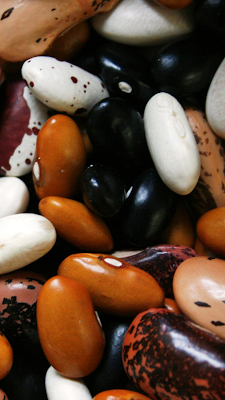
Eating More Beans Might Help You Live Longer

In a study finished in 2003, researchers tried to find out which food category made the most difference in how long people lived. Almost 800 participants in four countries (Australia, Sweden, Japan, and Greece) were studied for up to seven years. All of them were over 70 years old when the study started.

The researchers carefully monitored what the participants ate and divided the food categories into 9 groups:

1. vegetables

2. legumes

3. fruits and nuts

4. dairy products

5. grains and potatoes

6. meat

7. alcohol

8. fats (monounsaturated versus saturated)

9. seafood

Three of these groups were significant predictors of longevity: fat, seafood, and legumes. But the single food category that made the biggest difference across all cultures and ethnic groups was legumes. For every 20 grams of legumes per day a person added to their diet, they reduced their risk of death by 8%.

Add more beans (peas, lentils, etc.) to your diet and it will make you healthier. They are high in protein, low in fat (except peanuts), high in phytonutrients, high in vitamins and minerals, they have a low glycemic index, and they're cheap! Not only that, but they contain two sugars that are not broken down by stomach acid, so they make their way to your colon and selectively feed beneficial bacteria in your gut.

Legumes also add nitrogen to the soil. Most plants remove nitrogen from the soil, and can eventually deplete the soil. So when crops are rotated with legumes, it keeps the soil healthy and productive and makes it possible to use less (or no) fertilizer. So legumes are even good for the earth.

Here is a simple, easy, inexpensive, and tasty thing you can add to your diet that will make a significant difference to your health: Eat more beans.

Adam Khan is the author of Principles For Personal Growth, Slotralogy, Antivirus For Your Mind, and co-author with Klassy Evans of How to Change the Way You Look at Things (in Plain English). Follow his podcast, The Adam Bomb.

Where to Tap

Ever hear the story of the giant ship engine that failed? The ship’s owners tried one expert after another, but none of them could figure out how to fix the engine. 

Then they brought in an old man who had been fixing ships since he was a youngster. He carried a large bag of tools with him, and when he arrived, he immediately went to work. He inspected the engine very carefully, top to bottom. 

Two of the ship’s owners were there, watching this man, hoping he would know what to do. After looking things over, the old man reached into his bag and pulled out a small hammer. He gently tapped something. Instantly, the engine lurched into life. He carefully put his hammer away. The engine was fixed!

A week later, the owners received a bill from the old man for ten thousand dollars.

“What?!” the owners exclaimed. “He hardly did anything!” So they wrote the old man a note saying, “Please send us an itemized bill.”

The man sent a bill that read,

Tapping with a hammer............$2
Knowing where to tap...............$9998

Effort is important, but knowing where to make an effort in your life makes all the difference. And here’s something I’ve learned from experience and study: If you want to improve your life overall, the best place to tap is exercise.

I injured a tendon not too long ago and didn’t exercise for about a month. I’ve started again, and I’ve become a born-again exerciser! I’d forgotten how good it is for my sense of well-being. I have more energy, a better attitude, a gentler disposition. It’s easier to be the kind of person I want to be.

Our bodies need daily exercise, and when we don’t exercise, it makes us feel bad. I think it’s our natural state to be energetic and feeling good. But the lack of exercise prevents that. A consensus is building among doctors, psychologists and those trying to help others become saner, happier and healthier: Exercise is the place to start. If you were in a position to give advice, and someone unhappy or unhealthy came to you for guidance but you were allowed to give only one word of advice, the best thing you could recommend is: Exercise!

Adam Khan is the author of Principles For Personal Growth, Slotralogy, Antivirus For Your Mind, and co-author with Klassy Evans of How to Change the Way You Look at Things (in Plain English). Follow his podcast, The Adam Bomb.

Pessimism Is Bad For Your Immune System

The human immune system is incredibly complex. As living organisms, we are constantly bombarded by invading viruses, fungus, and bacteria and it is a constant battle with first, second and third lines of defense against invaders. 

We have immunoglobulin A, for example, in our saliva, to help kill invaders as they enter our mouths. We have many different immunoglobulins in our lungs, our intestines, our tears, etc. — in our points of vulnerability — the places where an invader can invade. At those points, we have immune defenses, guard posts, forts, standing guards. 

Our lives are at stake and the immune system that has evolved is amazing. The benefit of an advance in immune system technology all along our billions of years of evolution were enormous: The ultimate benefit — life or death.

We have T-cells that circulate in the blood and when they recognize an invader they have fought before, the measles or a flu virus for example, they reproduce the antibody for that invader and overwhelm it to kill it off.

When a virus invades your body, it's always a race between your T-cells and the invader. Whichever one can multiply fastest wins. You are invaded fairly often, but if your T-cells reproduce faster than the invader, you never even know the war went on. You won. You didn't get sick. But if your T-cells are sluggish, if they don't reproduce fast enough, the invaders multiply too quickly and overwhelm your defenses, and then backup defenses take over: Fever, excess mucous, whatever tools your immune system can muster to destroy the invader and prevent your own death.

Another battalion in your immune system is natural killer cells (NK cells). They cruise through your blood looking for anything foreign, like cancer cells, and kill it off. Your NK cells are more effective under certain conditions than others.

In one study, the researchers measured the level of pessimism, cynicism and defeatism (the deadly triad) in a group of elderly people and also once a year took blood samples to check the activity level of their immune system. The immune system was less vigorous and less effective in those with the highest measure of the deadly triad. Pessimism is bad for your immune system. Pessimism weakens your defenses against disease.

In another study, researchers looked at what might happen if people learned to think less pessimistically. They divided cancer patients into two groups. Both groups received standard medical care, and one group also received training in thinking less pessimistically once a week for twelve weeks, and also learned some relaxation techniques.

Taking blood samples, the researchers measured the NK cell activity. It was dramatically higher in the people trained to think differently.

In a study I mentioned in my book, Self-Help Stuff That Works, people were tested for their level of pessimism, cynicism, and defeatism. Then they were given some health-related information to study on health topics (like cancer, for example). Here's an interesting finding that really ought to be obvious: The most pessimistic spent less time studying the information and remembered less of it. It ought to be obvious but it was surprising to me when I first read about it, and it's surprising to a lot of people (especially pessimists).

But if you think about it, the outcome of the study makes perfect sense. Pessimism of course makes you less inclined to believe you can do anything to successfully change the course of events. And if you assume you can't do anything about preventing cancer, for example, you're not going to be very motivated to learn anything about it, are you? By assuming you're helpless, you become more of a victim.

What I like about this study is it counters what seems to be a common belief negative people have about optimists. They believe it is a form of sticking your head in the sand and ignoring reality. How else, the pessimists ask, could you avoid being pessimistic, cynical and defeatist? But this study shows that it is actually the people infected with the lamprey of the mind who are avoiding reality. People who haven't had their strength drained by the lamprey know that their own actions have an impact on the world. They know they aren't helpless. They know they have an influence on the outcome of events, so they are more open to information that can help them influence those events.

Because they get more information and they don't make themselves feel defeated, optimistic people are more likely to take action like eating better, exercising, getting checkups at the doctor. A pessimist is less inclined to take those kinds of actions because they feel it won't make much difference. And their lack of positive action makes them statistically more likely to die prematurely.

An optimist (and here I'm using the word in the scientific sense, which really has nothing to do with looking on the bright side or saying nice things to yourself; read more about scientific optimism) might say, "I can quit smoking." And if they try once and fail, they wouldn't give up. They aren't defeated so easily. They'll try again.

A pessimist would be less likely to try in the first place because they explain events in more defeatist ways. "I can't help it. Nicotine has me completely addicted." But if they try anyway but fail, their explanation will not motivate them to try again: "I guess I just can't do it." They are more likely to accept their fate and die prematurely.

In a study of cancer patients, those who thought most pessimistically had the highest death rates, even though they weren't any more diseased when the study began.

Here's another interesting study. Researchers from California and Finland teamed up to ask 2400 men how much they agreed with these two statements:

1. The future seems to me to be hopeless, and I can't believe that things are changing for the better.

2. I feel that it is impossible to reach the goals I would like to strive for.

Clearly this simple questionnaire measures how thoroughly the lamprey has done its work.

Six years later, the ones who answered with pessimism, cynicism and defeatism were two to three times more likely to have heart attacks, develop cancer, or die of any cause.

Researchers are amazingly creative. Some people collect stamps. I collect studies. I love the way researchers go about discovering how things work. Here's another good one. Researchers in Texas tested 2300 people over the age of 65 for the following:

        1. Hopefulness about the future.
        2. How much they enjoyed life.
        3. Self-worth.
        4. Their average walking speed.
        5. Their happiness level at the time.

Two years later, the researchers followed up on these people. Using these measurements of emotional health, they found that the least pessimistic participants were:

    1. Half as likely to have trouble with their daily activities.
    2. Were twice as likely to be alive.
    3. Had faster average walking speeds.

And these results were independent of their sex, weight, education level, or how much they drank or smoked.

In a Carnegie Mellon University study, researchers gave a cold virus using a nasal spray to 400 volunteers. They found that the most stressed out were twice as likely to catch the cold. Pessimistic, cynical, defeated ways of thinking make mildly stressful situation into more intensely stressful events, and as their actions ensue from their thoughts, they make things get even more stressful (by snapping at people, for example, causing people to snap back). The stress and the cortisol it produces then impairs the immune system.

Another great study was done by the Mayo Clinic. This one followed 800 people for 35 years. Every ten point difference in their level of pessimism increased their chances of dying from any cause 19 percent.

cortisol: the stress hormone

When you undergo stress, your body responds by pumping cortisol into your blood stream. Scientists all over the world have shown how cortisol influences the immune system, sometimes quite directly. For example, college students volunteered to have their mouths injured once during their summer vacation, and once again three days before the first test of a new semester. Cortisol levels are lower during summer vacation and higher right before exams.

The wound given in the mouth was very exact and measured carefully. Then the researchers measured a wound-healing substance in the blood and measured how long it took the wounds to heal. The ability to heal a wound is another of the immune system's line of defense.

During vacation, the wounds healed, on average, in eight days. During the exams, the wounds took eleven days. During the exams, the amount of the wound-healing substance in the blood dropped a whopping 68%.

Psychological stress is one of the side-effects of pessimism. And stress alters the level of certain hormones, like cortisol. These changes in hormones then alter the synthesis of other compounds. For example, cytokines are a compound that help regulate the immune system. When stress levels go up, it changes the level of cytokines.

This kind of roundabout causal chain explains some of the many different influences pessimism, cynicism and defeatism have on the immune system. For example, when people are given a vaccination for Hepatitis B or the flu, their immune system responds. Researchers have found that stress suppresses T-cell activity and measurably lowers antibody levels.

It's a common observation of doctors that people don't recover from surgery as well if they are very anxious and depressed before the surgery, but researchers have only recently begun to find out how this could be possible. Like the study above, another experiment deliberately injured volunteers and then carefully measured the immune response to see if the more stressed volunteers' immune response differed from the less stressed ones. It did.

The researchers created minor blisters on the volunteers' forearms and then removed the top skin layer of the blisters, sterilized it and covered it with plastic. They then tested the fluid in the blisters five hours later and then 24 hours later.

They were looking for two specific cytokines and the number of cells called neutrophils (a key cell your body uses to repair an injury).

The number of neutrophils was no different in stressed and unstressed people. But the number of cytokines was significantly lower in stressed people. They tested the volunteers' stress level by measuring the cortisol in their saliva. There was a strong correlation: The higher the cortisol level, the lower the cytokine level. Stress directly suppressed their immune response.

And thinking pessimistically, cynically, and defeatedly increases your stress level.

Researchers at the University of Texas Cancer Center discovered that stress hormones like norepinephrine (also known as noradrenaline) blocked the ability of macrophages to kill tumor cells. Macrophages are one type of white blood cell that surrounds and destroys invaders.

Here again, we see a chain reaction: An event happens and you interpret it. If the lamprey has a hold of your mind, the event causes stress hormones to be released into your blood stream. The stress hormones then weaken and hobble your immune system, making you more vulnerable to any number of health problems.

Feelings of confidence can influence your immune system. UCLA researchers tested the immune systems of a group of first-year law students at the beginning of a semester. By mid-term, those who thought pessimistically about their chances of succeeding had weaker immune systems by mid-term. Those who weren't under the influence of pessimism still had strong immune systems by mid-term.

If you know anything about evolution, you have probably had the thought, "Wouldn't our immune systems have evolved to kick into high gear during stress rather than slowing down?" But the body is making a trade-off. Stress hormones activate your body to deal with an immediate, physical threat. Stress hormones release blood sugar and rush it to your muscles. They speed up the heart and breathing rate, etc. When a virus enters your system, however, it doesn't upset you. No adrenaline is poured into your blood stream. You don't even know it happened until later. It is an altogether different kind of threat, and we have evolved an altogether different system to deal with it.

A stress response is an evolved response designed to be brief and infrequent. During a stress reaction, your immune system is temporarily hampered, but for a good cause: You moved quickly up a tree and evaded the pride of lions. Given the world we now live in, which is much different than the environment our bodies evolved to handle, pessimism, cynicism, and defeatism can produce more frequent stress reactions that last longer, which puts our immune systems are in danger.

marriage

As if this wasn't enough, it gets worse. Pessimism influences the way you speak, and the way you speak influences the way you argue with your spouse, and the way you argue determines how stressful those arguments will be.

Negative speech patterns obviously express negative thought patterns. And when you argue with your spouse using "negative fighting behaviors" as the researchers call them, it causes extra stress for your spouse. And the stress you cause your spouse impairs your spouse's immune system. But your negative fighting behaviors also impair your own immune responses.

Negative fighting behaviors stem from negative thinking patterns. Pessimism, cynicism, and defeatism are expressed in arguments in the form of name calling (labeling your spouse with a negative label), being sarcastic, finger-pointing, and withdrawing in hopeless exasperation (giving up, feeling helpless and defeated).

These negative fighting behaviors have been studied and they do indeed result in impaired immune functioning. They also increase the chance that the marriage will end in divorce, and divorce itself usually has an enormously negative impact on the immune system.

The average married couple has a serious argument about once a month, with small quarrels in between. Studies show if a couple never disagrees, if they avoid conflict, they will have less intimacy and problems are more likely to go unsolved. That's pretty obvious.

But if they disagree badly — if they think pessimistically, if they are cynical, if they get defeated easily by setbacks — they are more likely to divorce, and, more to the point for this section, it will be bad for their immune systems.

Howard Markman of the University of Denver, an expert on marital discord, has tried to figure out what the financial costs of marital fighting is. He estimates that Americans lose almost three billion dollars a year in diminished productivity. That's not even counting the damage to doors and frying pans.

Conflicts between husbands and wives lead to more illnesses and sick days. And even when they go to work, an argument with a spouse is likely to impair their performance at least a little.

Ohio State University researchers coaxed married couples to spend a half hour arguing about whatever topic got them the most angry at each other. The researchers looked at their fighting behaviors and measured their immune systems.

The researchers labeled behaviors like accepting responsibility, finding points of agreement, and suggesting compromises as "positive fighting behaviors." They labeled behaviors like criticism, blaming, sarcasm, disapproval, dismissal, and withdrawal as "negative fighting behaviors."

The couples' immune functions were tested before and after the half-hour argument. Everyone's immune function was weakened at least slightly from the argument. But the immune function was significantly weaker in those who used the most negative fighting behaviors.

So this is another angle on the same point: Pessimism is bad for your immune system. The researchers also found that the negative fighters had more antibodies for the Epstein-Barr virus, a virus that most of us keep in check fairly easily. The presence of more antibodies means that their immune systems were not just impaired from the immediate stress, but that their immune systems were not as effective in general. The way they fight is only an easily-seen display of the way they think, and the way they think is constantly disabling their immune system.

This information only scratches the surface. The studies go on and on. New ones are continually coming out. You can use this summary, however, to give you ammunition when you influence your loved ones to destroy the lampreys in their own minds. This information gives us a strong motivation to do something about it. It is not merely "nice" to feel more positive — it is imperative if we want to live a healthy life.

And hopefully it motivates you to root out and destroy the last remnants of pessimistic thinking lurking in your own mind. And to protect yourself from further infection from the pessimism that is constantly trying to worm its way into your mind. Here is where to start: Undemoralize Yourself.

Adam Khan is the author of Principles For Personal Growth, Slotralogy, Antivirus For Your Mind, and co-author with Klassy Evans of How to Change the Way You Look at Things (in Plain English). Follow his podcast, The Adam Bomb.

Negative Emotions Are Bad For Your Brain

According to a research team in Chicago: "People who often feel negative emotions may be more likely to develop memory problems as they age." The study focused on worry, but of course thought-mistakes of all kinds cause negative emotions. Thought-mistakes make you worry more than is necessary, make you frustrated more often than is fitting to the circumstances, make you feel disheartened by a setback that really won't be as difficult to overcome as you think it will, etc.

If you'd like to reduce the amount of negative emotion you feel, if you'd like to feel good more often, the most effective technique, according to over 600 studies, is to make fewer thought-mistakes in your usual way of thinking. I'm talking about mistakes like overgeneralizing or black-or-white thinking.

And the easiest, quickest way to make fewer thought-mistakes is to use the method outlined in Undemoralize Yourself. Start today cleaning up your thinking. You'll feel better, it'll be good for your relationships and good for your health, and you just might prevent memory problems down the road.

Some Speculations on Prayer

Doesn't prayer — wishing strongly for something — cause you to clarify and intensify your sincere intentions? Wouldn't that alone help you achieve what you're praying for? Wouldn't it help you stay focused on it and persistent about it? Of course, I'm here only talking about praying for something you can help make happen. If you're praying for rain, intensifying and clarifying your sincere intentions would be worthless (setting aside pure miracles for a moment).

As you can probably tell, I'm not a religious man. I wasn't indoctrinated with any religious teachings as a child, and I'm glad I wasn't. And yet I've had enough experience to suspect that somehow prayer has real, measurable effects in the world. Scientific studies indicate it as well (see the book, Healing Words).

That prayer might have real effects in the world seems amazing and mysterious to me, I guess more than it would be to someone raised with stories of miracles, and I guess I still don't quite believe it. But I don't quite disbelieve it either. When I first came across the studies, I immediately dismissed them as ridiculous. But then I realized that made me a believer of a different sort, didn't it? Dismissing what is a large collection of scientific research would mean I had "blind faith" that prayer can't have an effect. I don't want to be a believer one way or the other. I want to have open eyes and an open mind. I don't want to prematurely close my mind.

What I'm saying, though, is that even if prayer has no miraculous effects, it might still be worth doing if only to purify and clarify and strengthen your own good intentions. I know from experience that a clear intention makes that intention more likely to be accomplished than a vague intention. And I know that motivation is more easily sustained if you focus your emotions on it, which is what a prayer would do. That means that as long as the prayer didn't put you in a hopeless or helpless state of mind, it might be helpful.

Something else I was thinking about is metta meditation. Have you ever heard of it? It is a Buddhist form of meditation that focuses on love, kindness, and good wishes for others. Metta meditation is, then, a form of prayer. You are wishing good for others and yourself.

And I think prayer can include not only intending something, but also appreciating something, and reveling in that appreciation. Feeling grateful as a sort of meditation. A prayer of gratefulness.

You can also, of course, pray to ask for something you cannot influence with any actions you can take. That means if you are actually helpless to influence something, you don't have to feel helpless if you feel that you can pray and that does something. So if you used prayer in that way it might help you feel less helpless.

You can also pray for something in you, like strength of will, or seeing opportunities, or learning or growing. This also I think would help to clarify what you want to change about yourself. It would focus your attention on something you could actually influence: Your character.

I am not going anywhere with this. Just thinking out loud. What do you think? Let me know.

Read about a study on prayer: Send a Blessing.

Adam Khan is the author of Principles For Personal Growth, Slotralogy, Antivirus For Your Mind, and co-author with Klassy Evans of How to Change the Way You Look at Things (in Plain English). Follow his podcast, The Adam Bomb.

how to be healthier without lifting a finger

It's simple: become more optimistic, not in the airy-fairy, everything-happens-for-a-reason, rose-colored-glasses kind of way, but become more optimistic in the scientific sense of the word.

Optimism has a strong impact on your general health and immune system, and this is no longer the fanciful opinion of fringe healers, but a thoroughly validated conclusion of large, long-term studies.

Read more: Optimism Is Healthy

why pessimism shuts down your immune system

Pessimism leads to depression, whether it is mild or deep. And when a person is depressed, certain brain hormones become depleted, creating a chain of biochemical events that end up slowing down the activity of the immune system. For example, two key players in our immune systems are T cells and NK cells.

T CELLS recognize invaders (like viruses) and make more copies of themselves to kill off the invaders. Pessimists’ T cells don’t multiply as quickly as optimists’, allowing invaders to get the upper hand.

NK CELLS circulate in the blood and kill whatever they come across that they identify as foreign (like cancer cells). Pessimists’ NK cells can identify foreign entities, but they don’t destroy them as well as the optimists’ NK cells. 

Read more: Optimism Is Healthy and Optimism Interview

why failing to lose weight is a good thing

In a series of studies at Columbia University, it was found that people who successfully lost weight and kept it off had tried and failed a number of times before they finally succeeded.

When you change the way you eat or exercise, old habits tend to kick in and ruin your progress. To be successful, you first need to learn how to keep the changes and maintain them over time. Each attempt, even though it "failed," teaches you what you need to do to be successful in the future. In fact, the studies also showed that the more times you try to lose weight, the more likely your weight loss will be permanent.

So don't give up on yourself if you've tried and failed. Your very next attempt may be the one that succeeds.

The following chapters in Self-Help Stuff That Works will show you how to pick yourself up after a setback and continue. You don't need willpower, you need the ability to destroy the thoughts that suck away your soul; thoughts that take away your desire and motivation.
Optimism
Master The Art Of Making Meaning
How to Deal With Setbacks and Failures

Jack LaLanne's Diet

The legendary Jack LaLanne developed his way of eating over a long lifetime. And his vitality and strength at his advanced age are proof he knows what he’s doing. Let’s start with the basics. Jack LaLanne’s diet is low-fat. It includes a fair amount of lean protein. And he eats ample fruits and vegetables.

Jack LaLanne’s diet has very few grains, no flour and no sugar. He eats no red meat and no chicken. His lean protein consists of mostly egg whites and fish. He eats no cheese or milk products except he sometimes adds a little half and half to his morning smoothie.

Jack LaLanne’s diet includes vitamin and mineral supplements. And he drinks wine.

If you want more detail about it, I’ll point you to further resources at the end of this article, but that is Jack LaLanne’s diet in a nutshell.

Of course, Jack LaLanne’s diet isn’t the only key to his immense vigor. The other half of the equation is how he works out. Jack LaLanne’s main rule for working out is: Start easy, do what you can, and increase your workout gradually. If you don’t follow this rule, you are likely to hurt yourself and become discouraged.

For cardio, Jack LaLanne works out hard. He really pushes himself. Throughout his workout, he always tries to challenge himself. He changes his routine every three to four weeks to keep his muscles guessing (and growing).

He uses weights. He goes to failure sometimes but not every time. He works out every day, but he works out different muscle groups on different days. He works out about two hours a day. That’s cardio and strength training combined — two hours total.

After a lifetime of experimenting on himself, this is what Jack LaLanne came up with. It’s the key to his vitality and it could be the key to yours.

 Adam Khan is the author of Principles For Personal Growth, Slotralogy, Antivirus For Your Mind, and co-author with Klassy Evans of How to Change the Way You Look at Things (in Plain English). Follow his podcast, The Adam Bomb.

What's So Great About Meditation?

It takes a regular investment of time to meditate — and time is one thing most of us feel we don't have enough of. So why would anyone meditate? Are meditators just rebellious freaks? Or is there something to it? There are, surprisingly, several good reasons to spend the time:

1. Meditation produces a rare combination of increased alertness and profound relaxation. You become alert and deeply relaxed at the same time. You become more alert than your normal waking state and more deeply relaxed then you are when you're asleep. This is a different state of mind and body than you get doing anything else. After meditating, you feel well-rested.

2. An important side-effect of meditation is a dramatic drop in blood lactate level. Lactate is related to anxiety. When people feel anxious and their blood is measured, they have high levels of lactate in their blood. And when researchers inject pure lactate into an otherwise calm person, the person becomes anxious. Sometimes it even gives them panic attacks. The experience of low blood-lactate is a wonderful sense of peace.

3. Using a machine that measures the amount of sweat on the surface of the skin (a measurement of stress of all kinds: nervousness, anxiety, anger, etc. because when human beings experience even the slightest amount of stress, their skin sweats), the skin is four hundred percent drier during meditation than it is before meditating. The amount of sweat on the surface of your skin while you are meditating is less than it is when you're sleeping.

4. Meditation also lowers the cortisol level in your blood. Cortisol is a stress hormone. It is known as the stress hormone, although there are others. Too much cortisol is bad for your health. And most of us living in the modern, industrial world have too much of it in our system every single day. Lowering your cortisol level regularly is measurably and positively good for your health.

5. Almost all self-help techniques require a certain presence of mind, an ability to be calm and concentrate. For example, if you want to listen well, alter a habit, change the way you think, deal with conflict, and so on, you need to be here and remember to do it. So the calm you cultivate in meditation helps greatly in making other changes in your life.

6. It is like fasting from your normal state of daydreaming. It is, in a sense, waking up from the daydream and becoming aware that you were daydreaming and didn't know it. The ongoing stream of thoughts and interpretations you have in the process of making sense of your world is a kind of daydream. You interpret the world, you don't just perceive it. The technical term for this effect of meditation is deautomatization. The way you interpret your world is automatic. It is well worth making it less automatic. It makes you more capable of seeing things freshly and changing your mind about things you never would have even noticed before.

For these and many other good reasons, millions of people make the time every day to meditate. They don't generally go around trying to get others to do it or even tell others they meditate. They simply do it for their own personal benefit. And you can too.

Books for further study:

The Physical and Psychological Effects of Meditation: A Review of Contemporary Research With a Comprehensive Bibliography, 1931-1996
by M. Murphy and S. Donovan

The Book of Meditation: The Complete Guide to Modern Meditation
by Patricia Carrington

The Fine Arts of Relaxation, Concentration and Meditation, Revised: Ancient Skills for Modern Minds
by Joel and Michelle Levey

Adam Khan is the author of Principles For Personal Growth, Slotralogy, Antivirus For Your Mind, and co-author with Klassy Evans of How to Change the Way You Look at Things (in Plain English). Follow his podcast, The Adam Bomb.

The Health Benefits of Green Tea

You've heard about green tea's health benefits. Read the details here, reprinted from an article in Tea Magazine.

Tea is a drink whose time has come — again.

In the American colonies, tea was the most popular beverage until England's efforts to monopolize the tea trade, undercut American tradesmen, and capitalize on tea taxes turned the colonists against it. Besides throwing British tea into the Boston Harbor, the Americans expressed their rebellion by switching to a thicker, more bitter source of caffeine: coffee. But the Tea Tax no longer exists, and there are good reasons to switch back — not political this time, but scientific.

For years, studies in China and Japan have shown that the folklore about tea does contain some truth — it does promote longer life. In lung-cancer experiments with rats, the rats drinking green tea had only half the cancer rate as the non-tea-drinking rats. In other animal experiments, green tea was found to protect against colon cancer, skin cancer, stomach cancer, and breast cancer.

Japanese smokers have only half the lung cancer rate as American smokers. In areas of Japan where the most tea is drunk, the rate of stomach cancer (a big killer in Japan) is the lowest. In a study of 6000 Japanese women, those who drank five cups or more of green tea per day cut their risk of strokes by 50%.


GREEN EAST VERSUS BLACK WEST

In the West, we've been slow to study tea because, even with the increase in the popularity of tea, merchants still sell four times as much coffee. In addition, the studies emanating from Asia are about green tea, and Westerners customarily drink black tea.

Does black tea have the same health-promoting effect? Zhi-Yuan Wang of Rutgers University wanted to find out. He gave mice some carcinogens that normally cause skin tumors. A fourth of his mice were given green tea, a fourth got black tea, another fourth got decaffeinated black, and the last fourth got plain water. Sure enough, the green-tea-drinking mice developed 70% fewer tumors than the water drinkers. SEVENTY PERCENT FEWER! These are the kinds of findings that have awakened so much interest in tea. The numbers are big.

There are a lot of things people can do to improve their health, but usually the effect of any one of them is relatively small. Tea is different. For something so easy and pleasant to do, it is startling how great a difference it can make. The good news for us black tea lovers is the the black-tea-drinking mice also had 70% fewer tumors than the water drinkers. The decaf-tea drinkers had 60% fewer tumors — still a good showing.


RESEARCH ACCELERATION

Many studies are now being done in the West. Not only does tea reduce the rate of the cancers already mentioned, but it lowers the incidence of esophageal and liver cancers, too — also by dramatic amounts. And there is even more good news: tea lowers the risk of heart disease.

The two deadliest diseases for Americans are cancer and heart disease, and here is one substance — a substance that is easily available, inexpensive, and contains no calories — that lowers the incidence of both, and by a large margin!

A fifteen-year study in the Netherlands on 552 Dutch men aged 50-69 found that those who drank more than two cups of (in this case, black) tea daily were 50% less likely to have a fatal heart attack. The same study found that those who drank five cups of tea a day were 69% less likely to suffer a stroke than those men who only drank half as much tea.

In a study at the University of Southern California School of Medicine, elderly people who drank more than two cups of tea per day and had done so for a long time had a 63% lower risk of pancreatic cancer than people who had drunk less than a cup per day. The Norwegian government did a large-scale study (20,000 people) and found that the overall death rate was lower for those who drank at least one cup of tea per day.

Studies in both Norway and Israel have found that tea drinkers have lower blood cholesterol. This partially explains the reduced risk of heart disease and stroke, but it's even better than that: studies have shown that LDL, the "bad" cholesterol, only clogs arteries when it is damaged by oxidation. Tea is full of phytochemicals (chemicals found in plants) which act as powerful antioxidants. In a test-tube study of 39 food-derived antioxidants, the phytochemicals in tea were the most potent inhibitors of LDL oxidation. In fact, one compound in tea was found to be 20 times stronger than the potent antioxidant vitamin C.

One of the antioxidants in green tea is epigallocatechin gallate (EGCG); when you brew a cup and then let the water evaporate, half of what you have left is EGCG. Fifty percent of the solid matter of a cup of tea is a potent antioxidant.

We've all heard that a glass of red wine per day is good for us, primarily because of its antioxidants, one of the most potent being catechins. Let's compare tea with wine: a glass of red wine contains 300 milligrams of catechins; a cup of black tea, 210 milligrams. That's quite good; but the winner is green tea, with a whopping 375 milligrams per cup, and you can drive home afterwards.

A Dutch study of some 800 men found that those who had the most flavonoids (another kind of phytochemical) in their diet were 66% less likely to develop heart disease than those who consumed the least. For those who got the most flavonoids, their main source was black tea.

Research is exploding to the point where previous studies are being re-examined. The famous "Seven Countries Study" done in the 1960s has been re-analyzed in light of what we now know about tea. This study achieved fame because it was the first to show that the amount of fat in the diet affects heart disease. Re-analyzed, it seems that a high intake of antioxidants, mainly from tea, explains the lower incidence of heart disease in the tea-drinking countries.

An assistant professor at the University of Minnesota, Wei Zheng, MD, PhD, studied the tea-drinking habits of 35,369 postmenopausal women. Over an eight-year period, the women who drank at least two cups of tea per day had 32% fewer cancers of the digestive tract (including colon and esophagus) than women who only drank tea occasionally or never. They were also 60% less at risk from cancers of the bladder and kidneys. The women who drank at least four cups of tea had even fewer of these cancers.


ANTIOXIDANTS AND BEYOND

The ways in which tea produces its healthy effects go on and on. Women's livers metabolize estrogen and then send it through the gall bladder into the bile to be eliminated. Certain kinds of bacteria in the intestines change that estrogen into a potent cancer-producing hormone, which is then reabsorbed by the intestines, contributing to the development of breast cancer. Studies show that tea stops those bacteria from changing the estrogen into something dangerous, according to Herb Piersen, PhD, former director of the National Cancer Institute's Designer Foods Program.

Another way tea creates a healthy effect is by neutralizing nitrosamines (from cured meats) and heterocyclic amines (from cooked meats). "Drinking tea with meals in Japan and China," says a cancer researcher at the University of British Columbia, "is thought to be a major reason for the low cancer rates in these countries."

Tea also helps prevent tooth decay in several ways. It contains a solid dose of fluoride, and according to researchers at the Tokyo Dental College, it fights the kinds of bacteria in the mouth that cause gum disease and the eventual loss of the teeth. It worked better, in fact, than the antibiotic tetracycline. It also kills Streptococcus mutans, the greatest cavity-causing bacteria in the mouth.

Substances in green tea also lower hypertension in mice. The findings go on and on. In the test-tube, tea inhibits the proliferation of viruses, including influenza.

There is a downside to tea: it increases the passage of B and C vitamins and calcium through the body, although not very much. If you take a vitamin-mineral supplement, you're probably getting enough extra B and C vitamins to neutralize this effect.

One of the paradoxically valuable things about tea is that it contains caffeine. Caffeine is addicting. Once you start drinking tea, you tend to do so regularly, and this turns out to be a good thing. It keeps an uninterrupted flow of antioxidants going through your cells, cleaning up the damaging oxygen, killing dangerous bacteria, neutralizing carcinogens, lowering your cholesterol, preventing cancer, and keeping your veins from clogging.

Americans turned away from tea as a rebellion against oppression. Now we're switching back. Times are changing, and so are we — for the better, for our health. We have a new slogan: Drink your TEA. It does a body good.

Editor's note: Iced tea works as well as hot tea in bestowing healthy benefits, as long as it is brewed and not instant iced tea. Iced tea is an American invention and very rare in the rest of the world, but 80% of the tea Americans drink is iced.

This article originally appeared in TEA a magazine in the June/July 1997 issue.

A study by Purdue University researchers discovered that tea reduces the amount of mercury from fish you body digests. One of the dangers of eating fish is that it contains the heavy metal, mercury. In the study, when people were given a tea extract along with mackerel, up to 92 percent less mercury was absorbed than those who ate fish without the tea extract.

They tried both black and green tea extracts, which both worked well. Green tea extract worked a little better.

Adam Khan is the author of Principles For Personal Growth, Slotralogy, Antivirus For Your Mind, and co-author with Klassy Evans of How to Change the Way You Look at Things (in Plain English). Follow his podcast, The Adam Bomb.
Give Up Eating For Pleasure, at Least Some of the Time

Taste buds rule our lives and nobody seems to notice. The consequences are: We're fat, we have diseases like diabetes, we feel bad about ourselves, we are unhealthy and out of shape. Maybe not you. Maybe you're still young and it hasn't caught up with you yet. Maybe your cells and pancreas haven't become fatigued and your cells aren't insensitive to insulin yet. Or maybe you have disciplined your eating to some degree already. But one thing is sure: If you only ate what your taste buds desired, it would eventually spoil a great deal of your quality of life. For most people, their eating habits will be the core cause of what eventually kills them.

You've probably been fighting it. If you're reading this, chances are good you are the kind of person who takes your health into your own hands. Good for you.

But this insight will raise you above the fight. It will put taste buds in their proper place: Voteless. Without a voice. No more important than your cheek or a pinky toe.

This is a consumer society and the most prominent feature is literally consuming. Food is a major entertainment industry and frighteningly delicious food is being pushed on you from every angle. Food is a major activity of almost everyone. It takes up time and attention. Think of all the money and effort going to please those little buds on our tongues — at the expense of worthy causes, at the expense of our own health, at the expense of the planet as rainforests are being plowed under and oceans are being stripped clean to please our tongues.

Take this vow with me. Give up eating for pleasure. Like a holy vow. Similar to a vow of chastity or a vow of poverty, and basically for the same reason. Eat only what you need to nourish your body. It will be fresh vegetables, fruit, nuts, and good sources of protein.

You need only to consider one question when you wonder if this food is what is best for you: "Would I eat this if I couldn't taste it?" That question is more ingenious than it might seem at first.

What about when you are at someone's birthday party and everyone gets a piece of cake? Would you eat that cake even if you couldn't taste it? Yes, you probably would because you wouldn't want your hostess to feel bad, you wouldn't want the other people at the party to feel awkward by your abstinence, and you want to be part of the ceremony.

Ask yourself the question. It will steer you right every time.

Your taste buds want to eat sugar, fat, salt, and goodies. But they are like little kids jumping up and down pleading for a cookie. You need to be the dedicated parent who kindly but firmly says "no." The cookies aren't good for you. They won't help you grow strong and tall and smart.

Another good analogy is fidelity. When you get married, you choose to be faithful. You know you'll meet others who will be attractive to you. But you know it will spoil intimacy and trust, so you choose to forgo those goodies for a higher good.

It is not really a sacrifice. You give up a superficial temptation for a sacred reason. Your life is better because of it. You are a higher being when you stay true to your vow. You are happier. The people in your world are happier. It is good. The same is true for the vow to forgo the pleasures of the tongue. Not that you'll try to find foods that taste bad. Taste will become irrelevant. It is not one of the considerations you will use to decide whether to eat something or not.

Luckily, most of what you eat will still taste pretty good.

Adam Khan is the author of Principles For Personal Growth, Slotralogy, Antivirus For Your Mind, and co-author with Klassy Evans of How to Change the Way You Look at Things (in Plain English). Follow his podcast, The Adam Bomb.

Why Low Carb Diets Work

A low carb diet can help you lose weight. But if you go on the Atkins Diet or the South Beach Diet, or any low carb diet, your friends and family might think you're doing something dangerous. Go on a Weight Watchers Diet and it doesn't bother anybody. Why? Because low carb diets are unfamiliar. Read this and you can put their minds at ease.

When you eat carbohydrates (carbs), your body releases insulin into your blood stream. The insulin tells your cells what to do. It tells most cells to absorb the sugar out of the blood and tells your fat cells not to release any fat to burn (because there are carbs already in the blood to burn).

One of insulin's jobs is to take sugar out of the blood — the sooner the better, because sugar in the blood damages the body. The reason diabetics have such bad health problems (blindness, circulation problems, etc.) is because of the damage sugar does when the person can't make enough insulin.

When you eat something with a lot of sugar in it, the body kind of panics and usually overdoes it. Too much insulin is released to mop up the sugar. It takes all the sugar out of your blood. Then your blood sugar is too low, so you crave more sweets.

So insulin saved the day, keeping that sugar from damaging your body, but in the process, it makes your body store fat and prevents you from burning fat.

A low carb diet, like the Atkins or South Beach Diet or Protein Power all vary in how much to limit carbs, but the rough average is thirty carbs a day. At that level, you don't put very much insulin into your system, so your body burns any fat you eat as fuel, and if you need more, your fat cells freely release fat into your blood stream to be burned as fuel.

But when you eat a large amount of carbs — a hundred grams, two hundred grams, or more (most Westerners get about 300 grams a day) — your body releases insulin in huge amounts, which makes it almost impossible to burn fat. And makes it really easy to gain weight. Some people don't gain weight, of course, even though they eat lots of carbs, and we'll get to that in a minute. But first understand this basic process. This is why people lose weight so easily and quickly when they cut carbs: Because carbs increase insulin, which leads to storing fat and preventing fat from being burned.

Two other ways of dealing with this problem are to eat less and exercise more. Weight Watchers and other groups are built around limiting calories. Another way is to eat very low fat. Then when insulin is released, there isn't much fat around to store, and if you eat little enough, your fat cells have to release fat so you can survive. People obviously can lose weight this way. But it is difficult. It requires discipline. One of the reasons Weight Watchers is successful is their support. People help each other stay on the program. It would be difficult to keep at it otherwise because it is so hard. Why is it so hard? Because you're eating carbs, which cause you to crave more carbs, and then you deliberately limit how much you eat. So you feel hungry. And anyone who has tried to eat less for a long time has discovered it is very difficult. It's like running uphill. What you're eating is making you want to eat more, and then you make yourself eat less. It's tough. It can be done, but it's tough.

As anyone knows who has tried simply limiting calories or eating very little fat, it is very difficult to sustain it. You can do it for awhile, but then you can't stand it any more and you eat a lot. You lose weight only temporarily because you can't keep it up for any length of time without a lot of support or self-discipline. It's too hard to sustain. And whatever you do to lose weight has to be sustainable or you'll just gain it right back.

One of the reasons a low carb diet works is that protein and fat satisfy your hunger. When you eat protein, you do not crave more protein. If you had a huge plate of chicken, you would not continue to eat it after you had enough. You would eat a certain amount and then you wouldn't want to eat any more. You don't need a cheering section to keep you from eating any more. You're done. You're satisfied.

With carbs, you can never get enough. You can be full, topped off, completely stuffed, and you could still go for some ice cream! Eating carbs makes you crave more carbs.

Don't get me wrong: Limiting yourself to thirty grams of carbs a day is still difficult, but much easier than eating low fat or low calorie. Your tongue still wants carbs, but the rest of your body feels fine. And after awhile, even your tongue calms down — you aren't craving anything at all. And your fat cells steadily release their fuel to be burned. Instead of getting more difficult over time, low carb eating actually gets easier as the lust for carbs subsides.

We shouldn't really call low carb eating a "diet." You want to find a way to eat that you can maintain for your lifetime, not for a little while. And ideally it would be something you can do without having to rely on a tremendous amount of self-discipline, because it is likely you will sometimes falter. You can almost count on it. Face it, we're human. We weaken sometimes. Then you'll lose weight and gain it back, lose weight and gain it back. That's demoralizing and it's not healthy.

With Weight Watchers or another program that relies on emotional support to maintain, it will work, but you're still eating too many carbs to be good for your health. We'll get into that a little later on this page.

Let's recap a little bit before we go on. Insulin has three effects you don't want:

1. Converts sugar in the blood to fat in the cells — tells the body to store all the fat it can while the sugar is available

2. Tells the cells not to burn any fat, since there are plenty of sugar molecules to burn

3. Makes you crave more carbs

The name, "low carb diet" is really a misnomer. It should be called a low-insulin diet. All you're trying to do is keep your insulin low. You could call it a high fat diet or a high protein diet or even a high fiber diet (if you're doing it right). Fat doesn't cause your body to make insulin. Protein doesn't either. Only carbs do.

When there is very little insulin, your body has to burn fat. That becomes its main fuel, and your body actually gets better at burning fat the more it has to do (because your cells make more fat-burning enzymes and fewer sugar-burning enzymes).

If you want to lose weight quickly and keep it off, and also not hurt your health but actually improve your health, a low-insulin diet is the best way.

One of the most important factors about a low insulin diet is that you won't lose muscle. As long as you're getting enough protein, you could lose a hundred pounds, and you won't lose muscle. In fact, if you're exercising, this way of eating will make it easier to gain muscle. This is not true with programs like Weight Watchers. Yes, you can lose weight by eating less but half the weight you lose will be muscle, and that's no good.

Most people have been eating so many carbs for so long, they can't imagine eating a low insulin diet. But it's not as bad as you'd think and there are a lot of nice surprises. But the first couple days are difficult. Then it gets easier. At first you'll crave carbs, of course. But if you eat all you want of low carb food, after a few days, you'll stop eating so much and your weight will start dropping. Every once in awhile you'll miss carbs, but as you get used to the new way of eating, you'll think about it less and less. Most of the time you'll be really contented. Satisfied. Never hungry. And not nearly as obsessed with food as you used to be.

Because of the benefits of a low-insulin diet, and because it is much easier to sustain for a long time, the low-insulin diet completely crushes a high-insulin diet in any head-to-head competition.


why are carbs bad for you?

Believe it or not, carbs are highly unnatural. They seem so normal and healthy and everywhere it's hard to imagine a world without them, but during our evolution, carbs were very hard to come by.

Our ancestors started eating meat at least two million years ago. We invented agriculture only ten thousand years ago. Ten thousand years sounds like a long time, but in evolutionary terms, it is hardly any time at all. It's not nearly enough time to evolve a way of dealing with so many carbs (unless carbs were capable of killing us off before we had offspring, which they aren't). Our bodies literally do not know what to do with 300 grams of carbs a day.

If you kept your carbs under 30 per day, you would get slimmer in a very short time. And you'd be healthier. And you'd have fewer mood swings. And you'd sleep better. And so on.

But wait a minute. Our ancient ancestors had fruit, didn't they? Yes, they did. But it was only available during one short time of the year and the fruit had far less sugar and a lot more fiber than our fruit today has. For thousands of years, people have been selectively cultivating fruits that are sweeter and less fibrous, so fruit as we know it today hardly resembles the fruits of our ancestors.

And besides that, in the jungle canopy, most fruit is hard to get. It is way up there. Our very ancient ancestors lived in trees and could eat more fruit. But more than two million years ago, our ancestors were on the ground and eating meat and we've been relying on protein and fat ever since. We evolved quickly during that time. Many scientists think that our rapid evolution, especially our brain growth, became possible because we adapted to a high-protein diet.

Occasionally, our ancestors came across a honeycomb or ripe fruit, and they gorged themselves. Those who ate the most would survive a famine better than the others, because they would have more fat on their bodies. But for the most part, our hominid ancestors were lean.

Because carbs were so rare, and because a few carbs could make the difference between living and dying, people with the strongest, most intense desire to eat carbs survived better and had more offspring. The bad news is that now carbs are hugely and abundantly available and we have advertisers exploiting our cravings for all they're worth. The Western world now has an epidemic of diabetes and obesity and heart disease because we have a built-in craving for carbs and there is big money to be made exploiting that intense craving.

Think about this from another angle. When you cut carbs you eliminate heartburn and gas. You just don't have them any more. Those aren't the only two obvious negative consequences to eating lots of carbs, but let's just look at those two for a minute. Doesn't it seem that just from the point of view of what the body has evolved to handle, the diet that causes the least distress to the body is probably the most natural? Heartburn is not only uncomfortable, it is damaging to the esophagus. It is a sign something isn't right. And it goes away when you stop eating so many carbs. Your gas pains go away. Your skin clears up. Your weight goes down. Your blood pressure goes down. It is hard not to see this as clear evidence that eating so many carbs is not natural.


why don't some carb-eaters get fat?

If all I say is true, how come many people eat lots of sugar and don't get fat? That's a good question, and the answer is interesting. We start very young to feed our kids a carb-dominated diet. We crave carbs and carbs are cheap compared with protein. Our bodies do their best to keep up. So our pancreas works overtime making insulin and we keep it busy with our 300 carbs a day.

And many of us remain slim throughout our twenties and well into our thirties. But then something happens, doesn't it? People start to gain weight. Why? Because our cells start to be insensitive to insulin. Our cells don't respond as well as they used to. Insulin is telling the cells to take the sugar out of the blood, but the cell is overworked and underpaid and doesn't respond. The body has no choice. There is no other way to get that sugar out of the blood. And you can't leave it there. It would be too destructive. So the pancreas puts out even more insulin, forcing the cells to take the sugar.

Over time, the pancreas puts out more and more insulin, causing the person to gain weight eating exactly what they used to when they were slim. If this goes on long enough, in some people it will cause adult-onset diabetes. Normal diabetes is caused by a pancreas that doesn't make insulin. Adult-onset diabetes is caused by something different. The pancreas is still making insulin, but the cells have become so insensitive the insulin doesn't work. The insulin is no longer effective. But all the other effects of insulin continue: It forces the body to store fat and not burn it.

The inevitable development of insulin insensitivity is also evidence of the unnaturalness of a high-carb diet.


what do people eat on a low-insulin diet?

What has carbs? Meat has no carbs, except some processed meats (look on the label to find out). But regular meat has no carbs at all.

Almost all vegetables are low in carbs, except corn and potatoes. Carrots and peas are pretty high, but you probably don't have to worry about eating too much of those two because they are also high in fiber and fiber makes you feel full, so they are much more self-limiting than say, chocolate cake.

Here are a few veggies that are so low in carbs you can literally eat as much as you want:

Broccoli
Spinach
Celery
Asparagus
Cauliflower
Lettuce
Cabbage
Mushrooms

One of the great things about low-insulin eating is you can melt cheese all over your Broccoli and it's perfectly fine. It just makes your food that much more satisfying. Saute your spinach in butter. Dip your celery in gobs of blue cheese. As long as you don't stimulate insulin, your body will just burn the fat and won't store it. You don't have the insulin in your system to tell your body to store the fat. A lot of people make fun of this part of the Atkins diet. Robert Atkins really emphasized you can eat all the cheese and butter and fat you want. But what people don't realize is that you don't really want to eat much fat. Once you're past the first few days and your carb cravings have subsided, your desire for fat is pretty low. It is so satisfying it is self-limiting. You'll be eating more than you did before, but you won't be gorging yourself on fat by any means. I think Atkins used that ploy because when people think about giving up carbs, it is hard to contemplate. So at least here is some compensation: You can eat fat. Most of us have been eating less fat than we want for a long time.

So Atkins said: Yes, you have to give up on breads and pastas and cakes, but you get to have cheese and butter and steak. It is easier to contemplate such a large change in your eating habits when you have that to comfort you. But really, you'll find you don't really eat that much once you cut down to thirty carbs a day. Protein and fat are so satisfying, you just don't eat that much. You don't usually even get full.

What about fruits? Most fruits are too high in carbs to eat very much. Berries are an exception. They are closer to natural fruits: Low in sugar and high in fiber. And it turns out berries are really good for you (high in powerful antioxidants).

You can eat all the Brazil nuts, walnuts, and hazelnuts you want. They are low in carbs and high in omega-3 fats.

So here is the bottom line. Eat these:

Meat (grass-fed if you can find it)
Fish (not farmed)
Chicken
Eggs
Veggies
Berries
Walnuts
Brazil nuts
Hazelnuts

And try to eat very little (or none) of these:

Grain
Potatoes
Sugar

All you have to really remember to lower you insulin is to try to eat as close to a hunter-gatherer diet as possible. Imagine what you could eat if you walked out into a wilderness and tried to survive. You'd eat mostly meat. You might find some fibrous leaves. Maybe a few berries at a certain time of the year. Perhaps some roots here and there. Nuts if you could find some.

For the last two million years, our ancestors ate mainly meat, and the vegetables and fruits they had were very low in carbs. Forty thousand years ago or two million years ago, you would have been hard pressed to find anything sweet that was low in fiber.

Eat like the Lakota (Native Americans, Plains Indians): Mostly buffalo. Some plants and roots. Very low carb. Very high fiber.

It seems like eating this way, you're giving up a lot, right? But you're gaining more than you're giving up. Carbs give you acne, make you less able to control your weight, make you more depressed, give you gas, heartburn, and make you feel stuffed. Carbs are bad for your long-term health in many ways. Every time I have slacked and eaten carbs for a few days, my quality of life has gone dramatically downhill. The only thing that improves is a pleasurable sensation on my tongue that doesn't last very long. Keep that in mind. When you find yourself concentrating on what you've lost, give equal time to what you've gained. It feels great to be slim. It is a great relief not to have to think about food all the time, which carbs tend to make you do. And, as a bonus, low carb foods are also pleasurable on the tongue.

By the way, when you're looking at labels to find out how many carbs something has, don't forget to subtract the fiber. Fiber doesn't count. It is a carb, but you can't digest it. That's what fiber means: An undigestible carb. So it doesn't have any effect on your insulin. It puts no sugar into your blood stream. It gives you no calories. It just passes right through you.

For example, a stalk of Broccoli has 8 grams of carbs. But 5 grams are fiber. So a stalk of Broccoli really has only 3 grams of carbs. That's what some labels call "net carbs" or "effective carbs."

If you're trying to figure out how many carbs you're eating, make sure you subtract the fiber.


resisting the urge

Here is another reason a calorie-restricting diet is a bad idea: It makes you weaker. It makes you less persistent. Check this out: A study was done at Case Western Reserve University in Ohio. They had three groups of students. Each person was given the same puzzle to solve. None of them knew the puzzle was unsolvable.

One group was allowed to snack from a plate full of cookies as they worked on the puzzle.

Another group was asked not to eat the plate full of cookies.

And the third group worked on the puzzle in a room containing no cookies.

The researchers counted how many times a student tried to solve the puzzle before they gave up. The students who had to resist eating the plate full of cookies gave up after half as many tries as the other two groups. Half as many tries!

Persistence is important, as you well know. The ability to stick with something may be the most important quality of success. And apparently not eating something undermines persistence.

So should you always just eat the cookies? That's one solution. Another is to not have them in the room; to not have them there to resist. In this society, that is a challenge.

We live in a culture obsessed with goodies, obsessed with food — especially obsessed with carbs. You go somewhere to hang out with your friends. You end up at an Italian restaurant. A carb-filled menu if there ever was one. You go to work and someone has brought in cookies. You come home and someone has baked a cake. Now you have to spend psychological energy not eating something.

Although you can't control your environment completely, you can control it somewhat. And whatever degree of control you have, you ought to exert it. Your choice of friends. Your influence over what activities you do together. What is available in your house. And you can try to influence people rather than have them influence you. That's one of the reasons I've written this article. I want you to be able to explain to others how a low carb diet works, so you can influence them, so it'll be easier for you to maintain this way of eating. If everybody in your household eats this way, they will be healthier, slimmer, happier, and it will be a lot easier for you to keep it up without having to constantly resist temptation.

Anyway, I thought you should know about this study. For one reason, if you were trying to resist goodies, you may find yourself with less persistence without any idea it's because you're resisting goodies. And second, because the study suggests it is better to control and influence your environment rather than try to resist your environment.


from scientific american

The following is from an article in Scientific American that had nothing to do with low carb diets. The article was about scientists who are trying to find out what causes aging. They've made a significant discovery, and it applies to low insulin eating. Of course, the scientists are focused on trying to come up with a drug to deal with this. They don't seem to have even thought about a connection to the Atkins diet. Here's the essence of what they discovered:

Sugars act as molecular glue, attaching themselves to the amino groups in tissue proteins and cross-linking them into hard yellow-brown compounds known as advanced glycation end products, or AGEs.

After years of bread, noodles and cakes, human tissues inevitably become rigid and yellow with pigmented AGE deposits. For the most part, piling on dark pigments in the teeth, bones and skin is harmless, but where glucose forms tight bonds with the long-lived protein collagen, the result is a constellation of changes, including thickened arteries, stiff joints, feeble muscles and failing organs — the hallmarks of a frail old age.

Sugar's connection with AGE formation may be one reason caloric restriction might delay aging.

The authors never mentioned it, but maybe a low insulin diet would delay aging too. Instead of taking a drug that prevents sugar from bonding with protein, how about just eating less sugar?


shouldn't you eat a balanced diet?

This is a frequent comment by people against low carb diets: "You need to eat a balanced diet." But what does that mean? An equal amount of what? And who is making the categories? I think people should eat whatever is good for them. If that means very little fruit, lots of high fiber veggies, and lots of meat, then that is a balanced diet. If it's healthy, if eating that way makes a person healthy and strong and feeling good, then that is a "balanced" diet — balanced in the sense that you have the right proportion of foods that will make you lean and healthy.

Should you eat equal proportions of fat, carbs, and protein? If it makes you fat or raises your blood pressure or gives you diabetes, it doesn't seem like a good idea. The solution, so they say, is just eat less and exercise more. Easy to say, harder to do. Communism sounded good, too, until they tried it on actual human beings. What sounds good on paper doesn't necessarily work if you didn't take into account human nature. If you want to succeed, you have to recommend what people can actually do, what they will actually do.


Eating less than you want for the rest of your life is something almost everybody will find difficult to do.

Should you make sure you eat something from all the food groups? That's what many nutritionists are recommending. But why? Who says? Some of those food groups are invented! Go into the wilderness and find me some bread or pasta. Humans invented those as foods, put them on the food pyramid, and then declared you have to eat that stuff to have a balanced diet. It's crazy. For millions of years of our evolution, those foods didn't exist. And now they are necessary? Come on. Sounds like hokem to me.

One of the main reasons there is so much controversy about low carb dieting is because a lot of people and institutions have been recommending a low fat, high carb diet for a long time. People have a vested interest in it. They have been promoting it for years. It is very difficult to admit you were wrong, especially if you have confidently recommended something to hundreds of people. Say something enough times and you become very convinced of it. I was one of those. I was a serious athlete at a young age and cared a lot about nutrition, so I've been studying it all my life. So when I first started reading about low carb diets, I was very skeptical.

The first book I read was Protein Power. The authors go into quite a bit of detail about how it works, and I was surprised that nothing they said conflicted with what I already knew. But the information was lined up to form new conclusions.

And it works. What do I mean by "works?" First of all, I lost weight. I wasn't overweight, or at least nobody would have said I was. But I lost twenty pounds and I've kept it off for six years now. My blood pressure also came down. It had been slowly creeping up toward the end of my thirties. Within a couple months my weight and blood pressure dropped to what they were when I was in my twenties, and have stayed there. So it works in that sense. And I am able to keep eating this way without really having to concentrate on it. It works in that sense too.

There has been a steady stream of studies about low carb diets or high protein diets or whatever you want to call them, and they are all positive. One of the best pieces of news is that a low-insulin diet may actually help prevent heart disease, which seems really counterintuitive if you've been indoctrinated into the Fat Is Evil philosophy. But the research is vindicating Atkins. He was saying this a long time ago. And Atkins wasn't the first. This idea goes way back, and has been scoffed at for a long time.

It seems counterintuitive, but it does stand to reason that if a low carb diet helps you lose weight and lower blood pressure it might help prevent heart disease. But I know, it is still hard to believe.

Sometimes something new comes along and you need to update what you thought you knew. I believe this is one of those.


what color is your food?

Because most people selling low carb diets are promoting weight loss, the authors say very little about another benefit of this way of eating: More phytonutrients. Foods have other elements in them besides protein, fat, carbs, vitamins, and minerals. The other elements are called phytonutrients or phytochemicals. And they have some positive benefits to health. They function as antioxidants and virus inhibitors and cancer preventers and vein strengtheners and on and on. This is real science. I'm not talking about "health tonics" or snake oil. The phytonutrients in plants have significant and healthy effects on humans.

When you stop eating so much flour and sugar, you tend to replace it with vegetables and berries, and those contain lots of phytonutrients. Grains and sugars don't have much if any. The first and most vocal promoter of low carb diets, Robert Atkins, didn't say much about this. And it's too bad, because anybody who knows about this stuff usually sees a very big problem with a high protein, high fat diet — namely, the lack of phytonutrients. But I noticed just the opposite. I increased the amounts of vegetables and berries I ate.

All the other stuff about nutrition doesn't go away. It all still counts. Although you may be able to lose weight eating all the butter and steak you want, that doesn't make it the healthiest thing to do. You should pay attention to what kind of oil you eat. Grass-fed beef is better than grain-fed beef. Blueberries are better than apple juice. Yes, eat fewer carbs, but make the carbs, the fat, and the protein good quality and as healthy as you can. Be slim and be healthy.

Adam Khan is the author of Principles For Personal Growth, Slotralogy, Antivirus For Your Mind, and co-author with Klassy Evans of How to Change the Way You Look at Things (in Plain English). Follow his podcast, The Adam Bomb.